The Two Blacks
Black obsidian comes in more than one black, and the difference is not decorative.
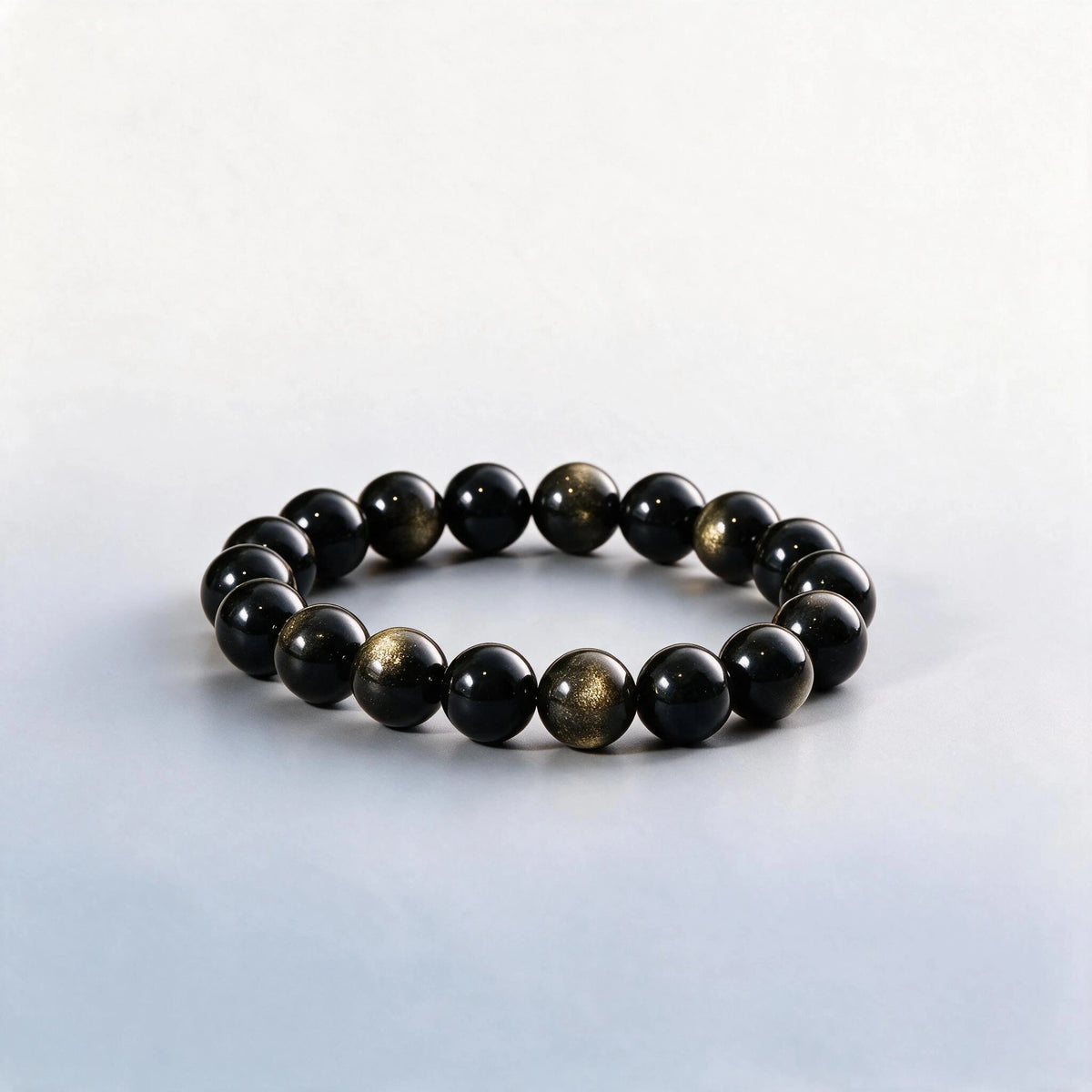
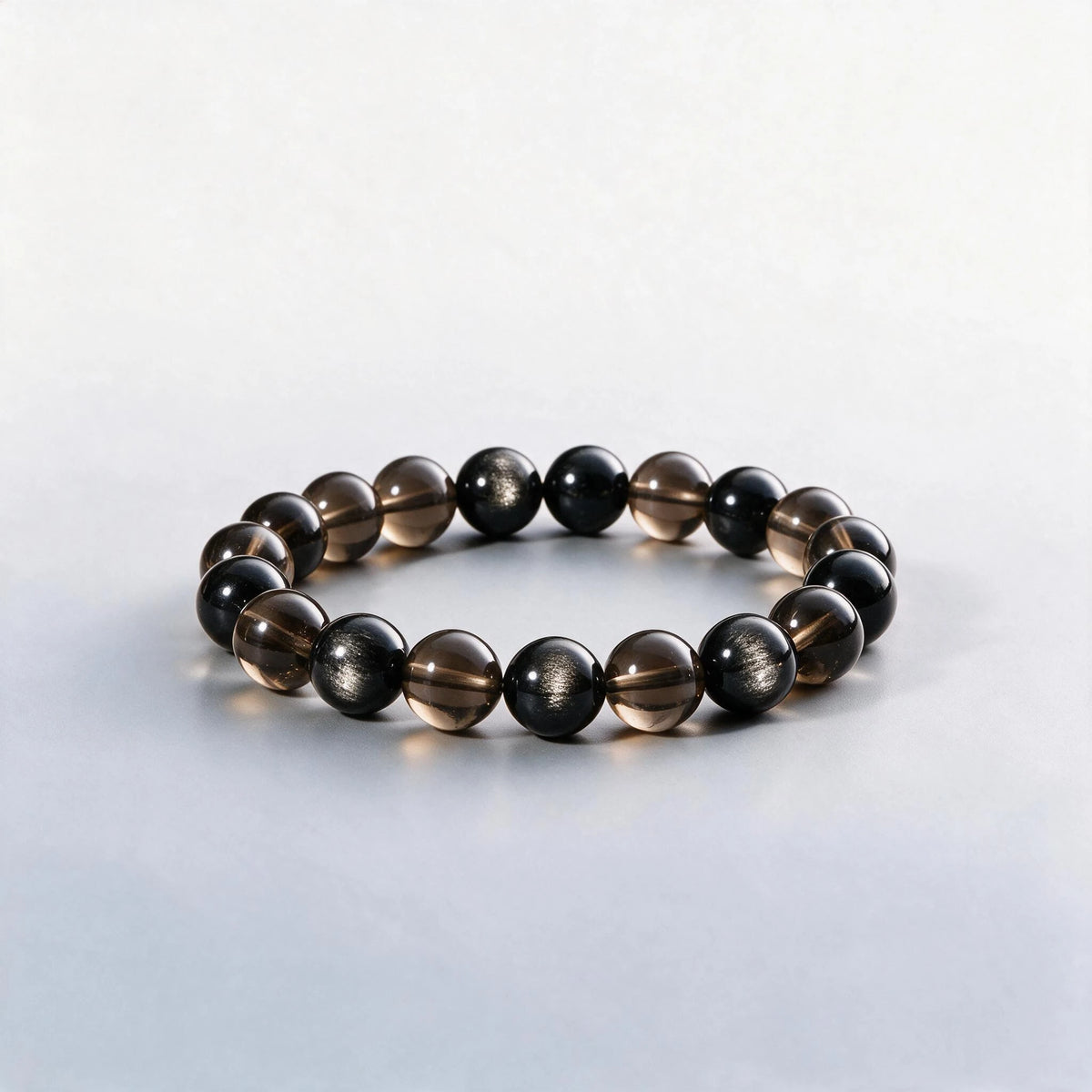
Plain obsidian returns nothing. Turn it in the light and it stays the same flat dark; the surface swallows what hits it. Gold sheen and silver sheen obsidian carry a layer of aligned inclusions, thin enough to throw light back at a particular angle, so those beads stay quiet until the light or your wrist moves.
That is the whole choice in this collection. One black that never answers, one black that answers only when you turn.
In the Hand
It is lighter than you expect. Specific gravity is 2.35 to 2.6 against 2.65 for quartz, so a full strand weighs less than the quartz piece beside it.
It is also not cold the way a crystal is cold. Glass draws warmth more slowly, so a bead reads cool for the first minute and then simply becomes your temperature. Hardness is 5 to 5.5, softer than quartz, so it is best kept in its own pouch rather than loose with harder stones.
One Piece Where Black Is the Ground
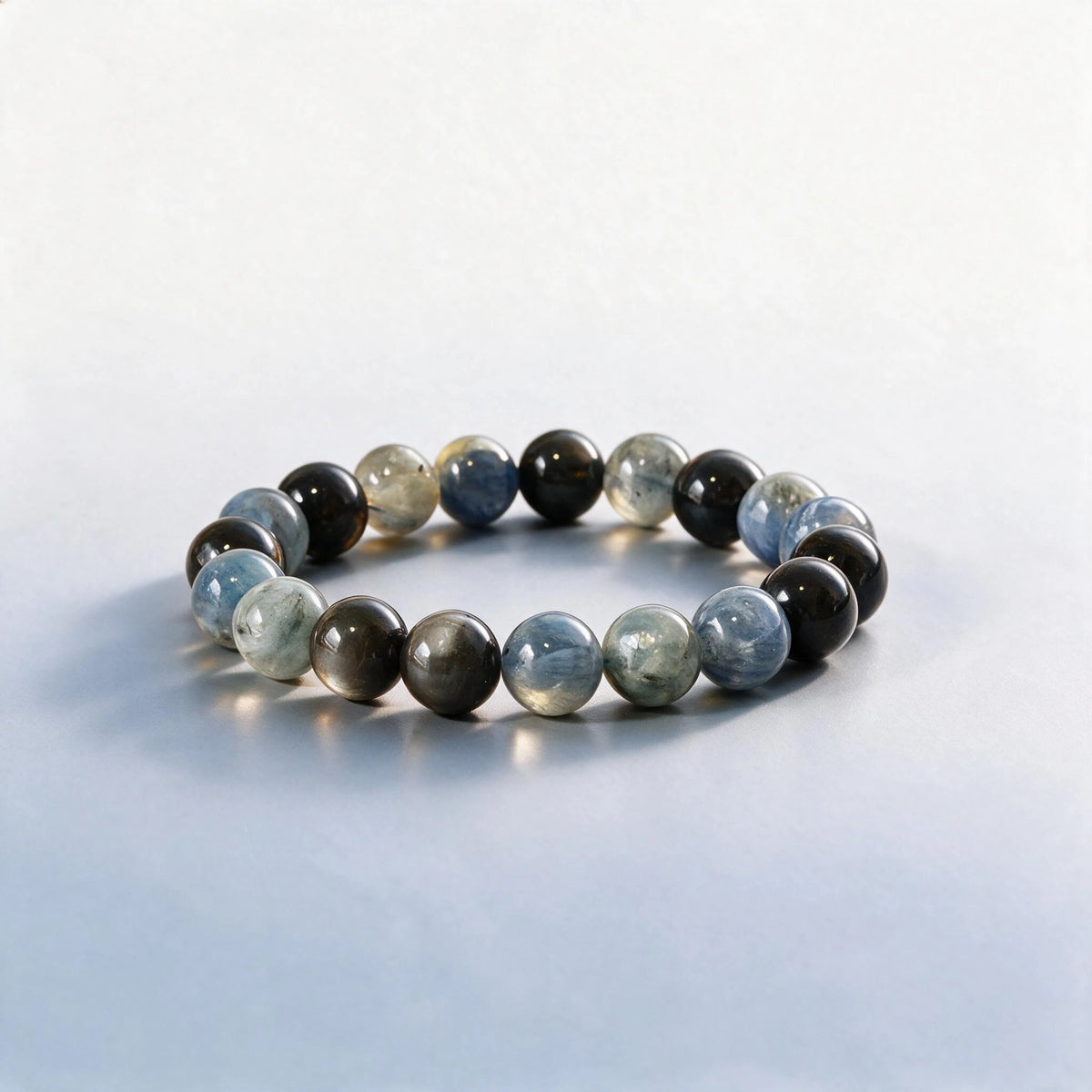
The third piece here pairs its obsidian with blue kyanite, and the order matters: on that strand the blue is the subject and the black is the ground it stands on. Kyanite holds light along one axis, so the piece reads as a single bright line rather than a surface. It is the least black of the three, and for some people that is the reason to choose it.
Where to Begin
Start with the plain one if you have never worn black. It goes with everything and announces nothing.
Start with the sheened one if you already wear dark stones and want the wrist to move when the light does. Gold sheen sits warmer; silver sheen reads colder and closer to grey.
If you want to know why this stone has been called a protective one for so long, that is not a question a product page answers well. It is written out in the journal: why obsidian was a blade before it was a bracelet, and where the word came from.