Two Kinds of Weather
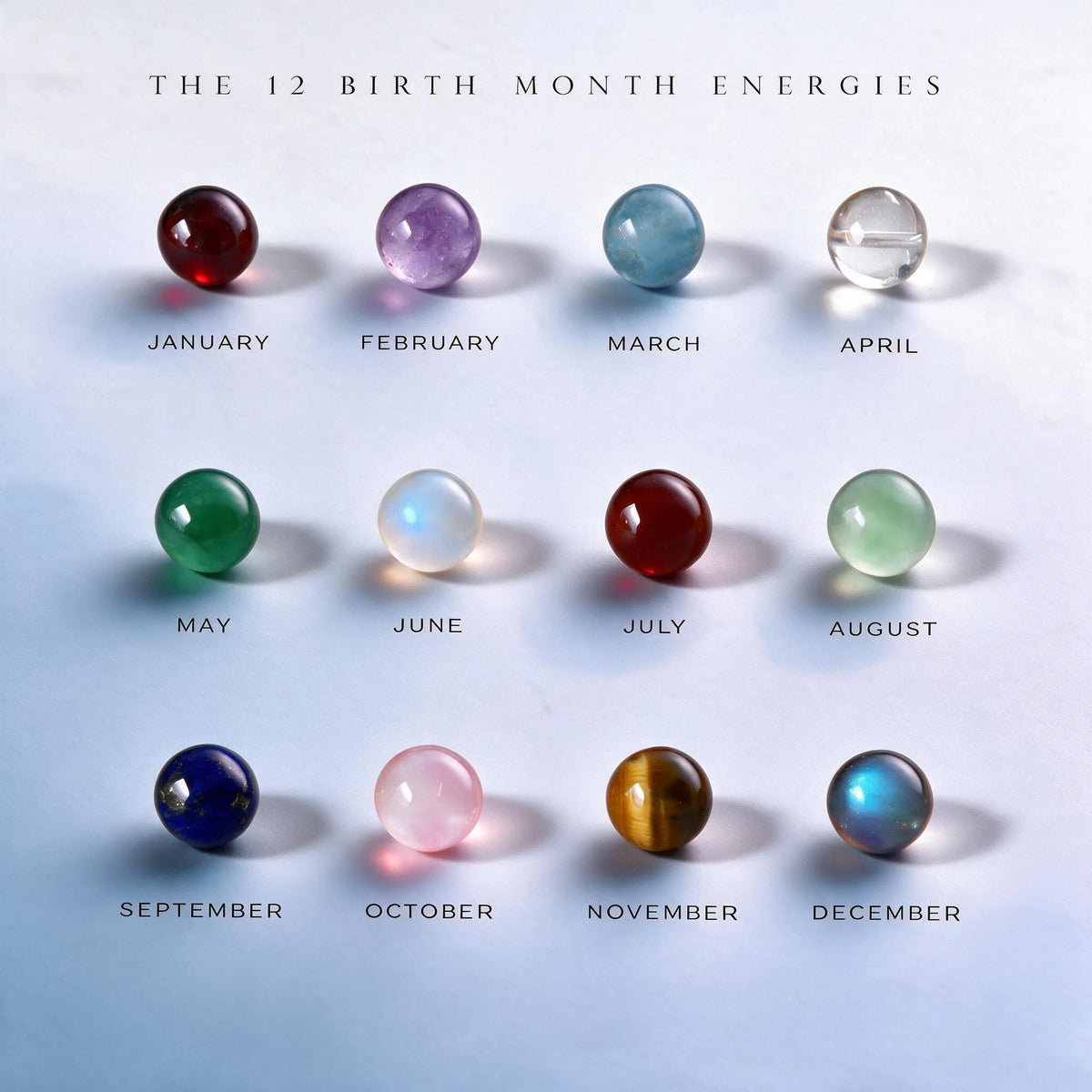
Both stones do the same thing. They take light in, break it into wavelengths, and send back a colour that was not in the light that arrived. Neither contains a blue pigment. The stack of layers inside is what does it.
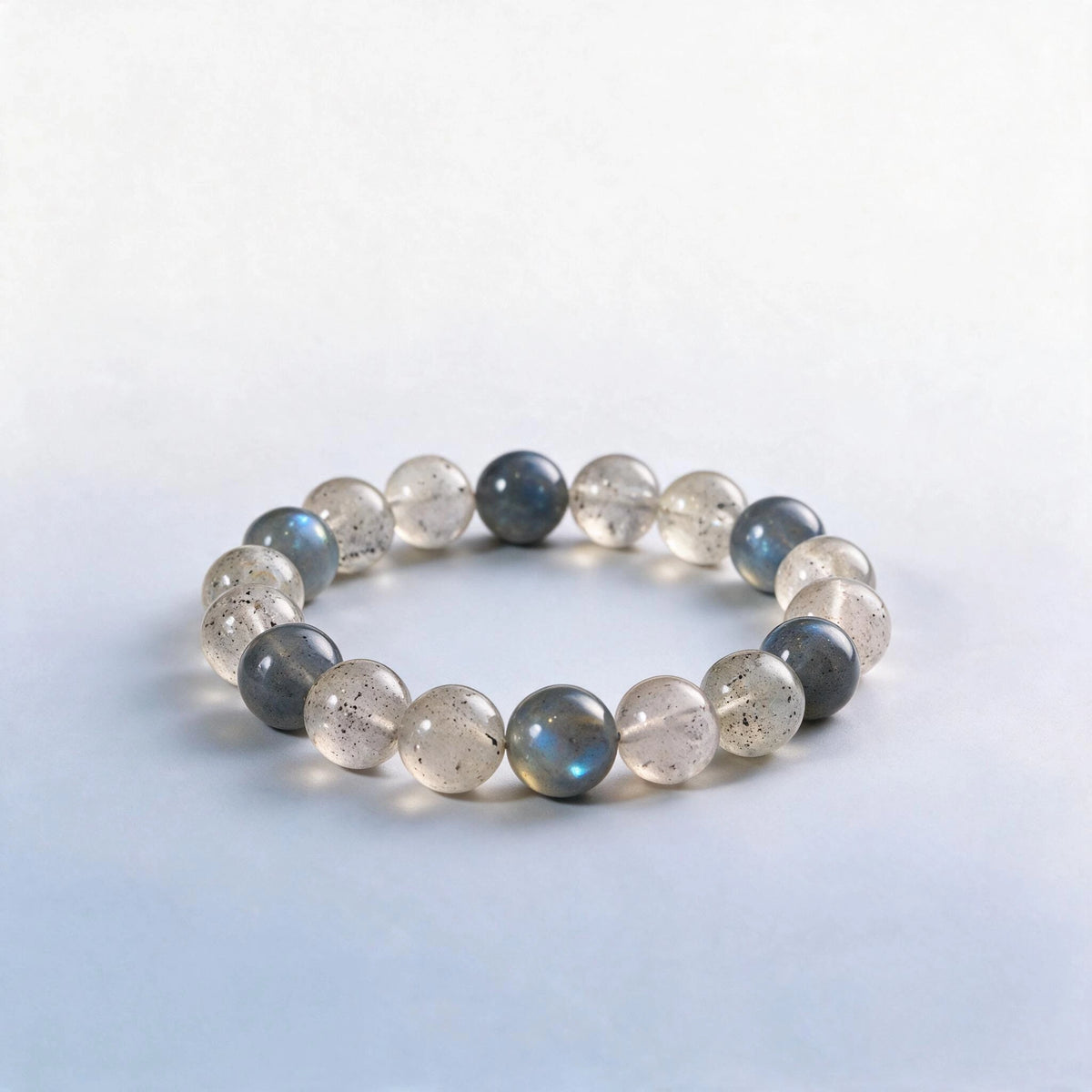
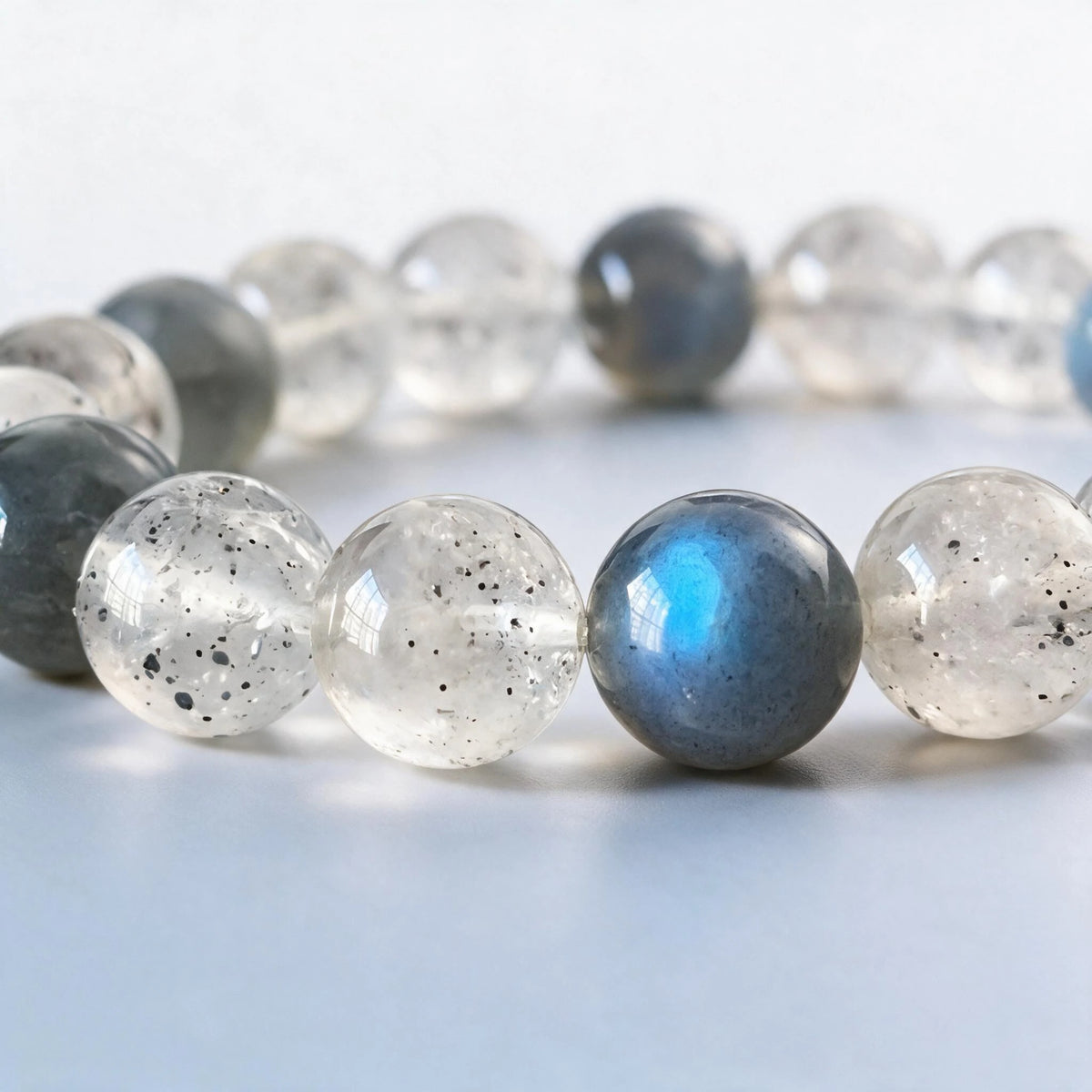
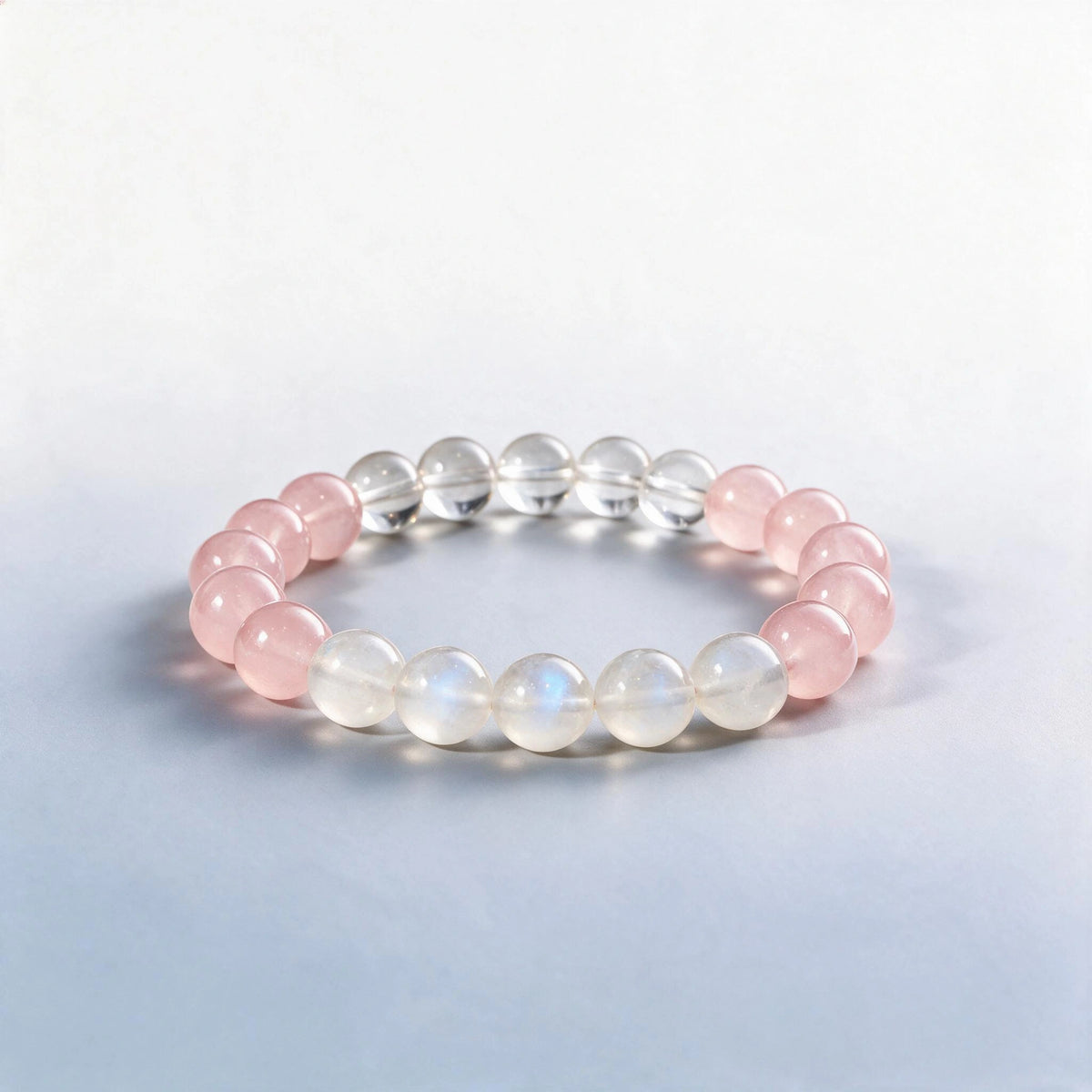
What differs is the stack. Moonstone's layers are thin and regular, so the sheen sits flat and floats instead of flashing. Labradorite's are wider and less even, so the colour arrives in a narrower band that shifts harder when you turn the stone.
The trade has two names for it, adularescence and labradorescence, and they describe one mechanism with two habits. On the wrist the difference is not subtle. One is fog; the other is lightning.
In the Hand
Both are feldspar, both sit at 6 to 6.5 on the Mohs scale, and both are cut as domes because that is the only shape the effect lives in.
The weight is where they part. Moonstone runs about 2.56 to 2.60 in specific gravity; labradorite runs 2.68 to 2.72. The difference is small on paper and noticeable on a wrist: the labradorite strand sits heavier than its size suggests.
Neither is tough in the way quartz is. Both have cleavage, so a knock is a bigger risk than a rub. A scratch dulls the sheen on one bead. A chip takes it out of that bead for good.
Why Indoors Is the Hard Test
This is the part people find out after the parcel arrives.
Both effects need a light source with a direction. Daylight from a window has one. A single overhead bulb does not. Under a ceiling light, moonstone goes pale and quiet, and labradorite's flash narrows to a small patch you have to hunt for. Neither stone has stopped working. You took away the light it works with.
The practical version: judge them at a window, not under a lamp. Outdoors in the afternoon, moonstone is a different object. Labradorite needs less light than moonstone and holds up better indoors, but it still wants an angle.
If you have ever bought a feldspar bracelet and thought it looked nothing like the photograph, this is why. The photograph had direction.
Where to Begin
Moonstone if you want the quieter of the two. The sheen sits flat and low, and the piece reads as a change of temperature rather than a change of colour.
Labradorite if you want the flash. It is darker at rest, so the colour arrives in bursts, and it moves faster.
If you want the whole argument, including the two goddesses behind the moonstone name and the Inuit story behind labradorite, it is in the journal: one light, two stories.
For storage and cleaning, see our crystal bracelet care guide.