One Note, and Three Grounds
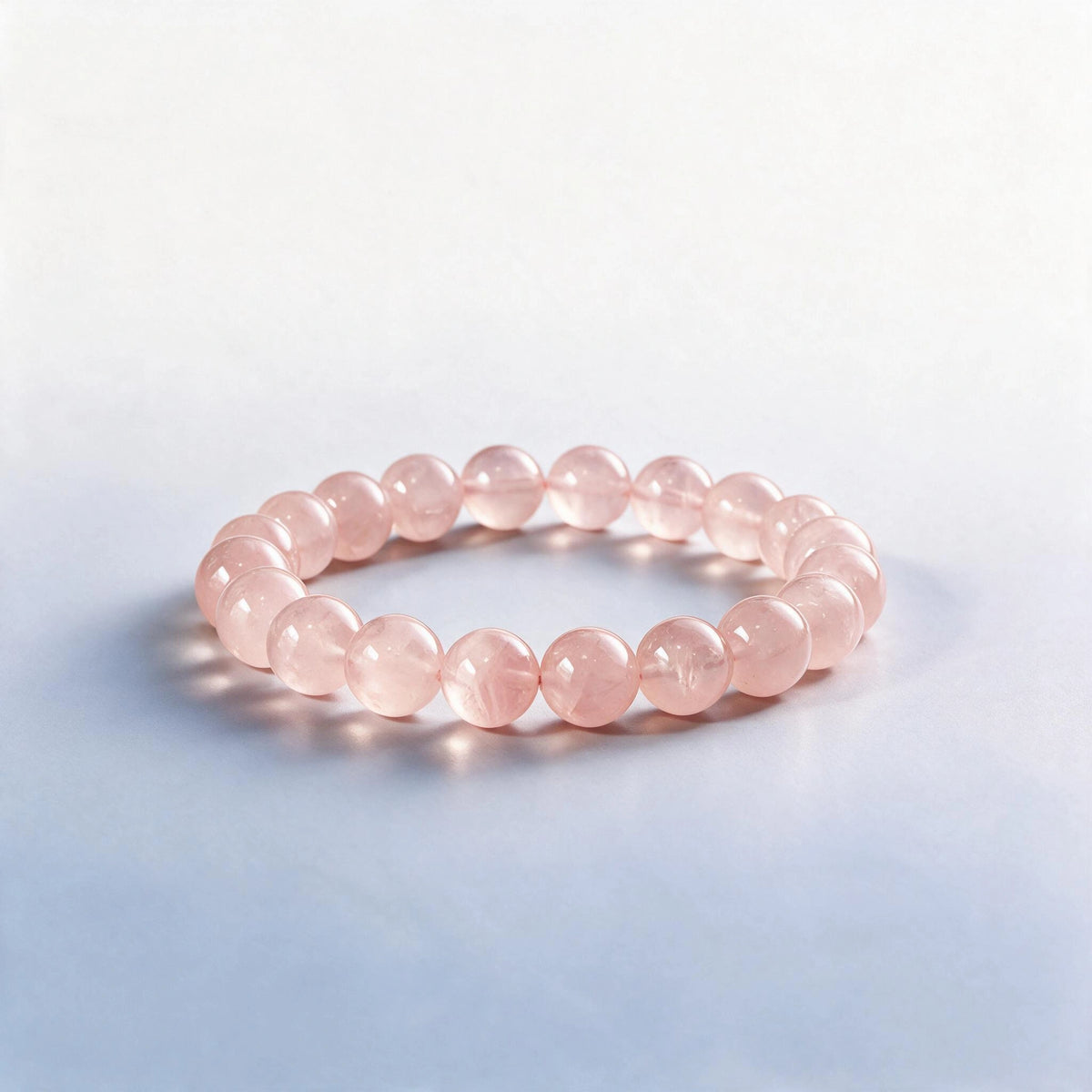
Four pieces, and only one of them is a single stone from clasp to clasp. The Pure Heart has no second colour to set it against, which is why it reads as one flat note rather than a composition.
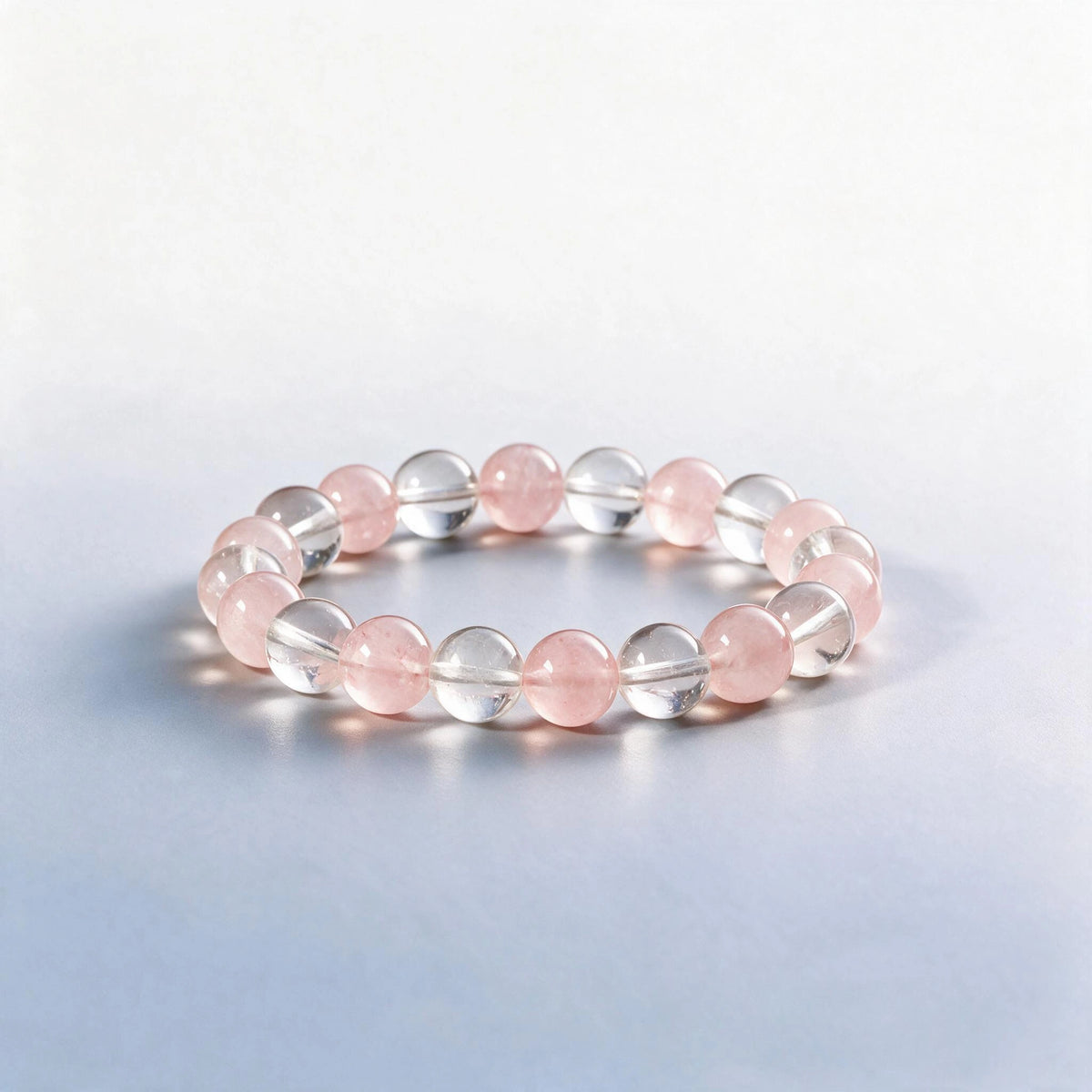
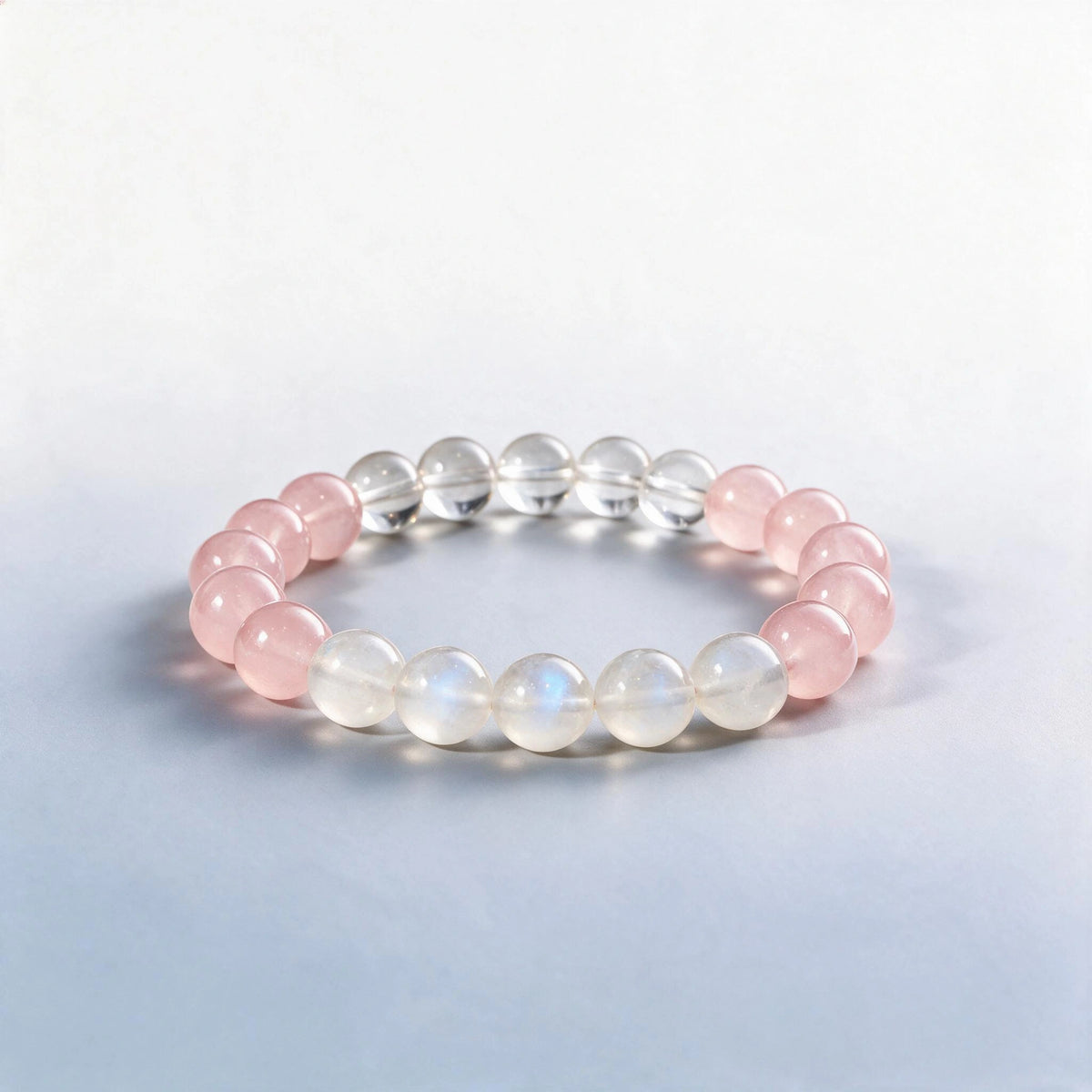
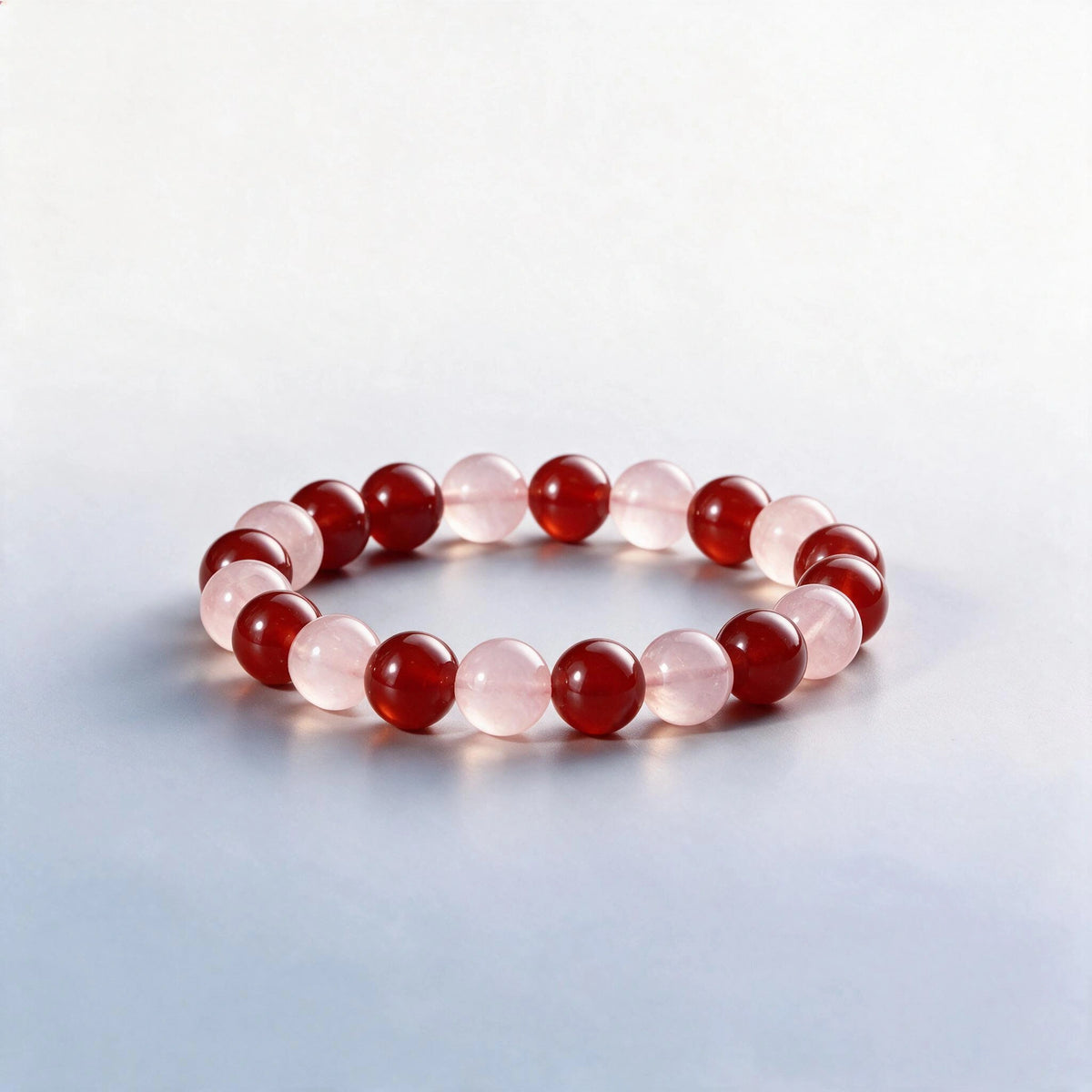
The other three use rose quartz the way a painter uses a ground: it goes underneath, it sets the temperature, and it never asks to be the subject. In The Lover's Moon it sits beside moonstone. In Fresh Dawn it sits under clear quartz. In Velvet Fire it sits against red agate, and it is the only stone pale enough to soften that red without turning it brown.
In the Hand
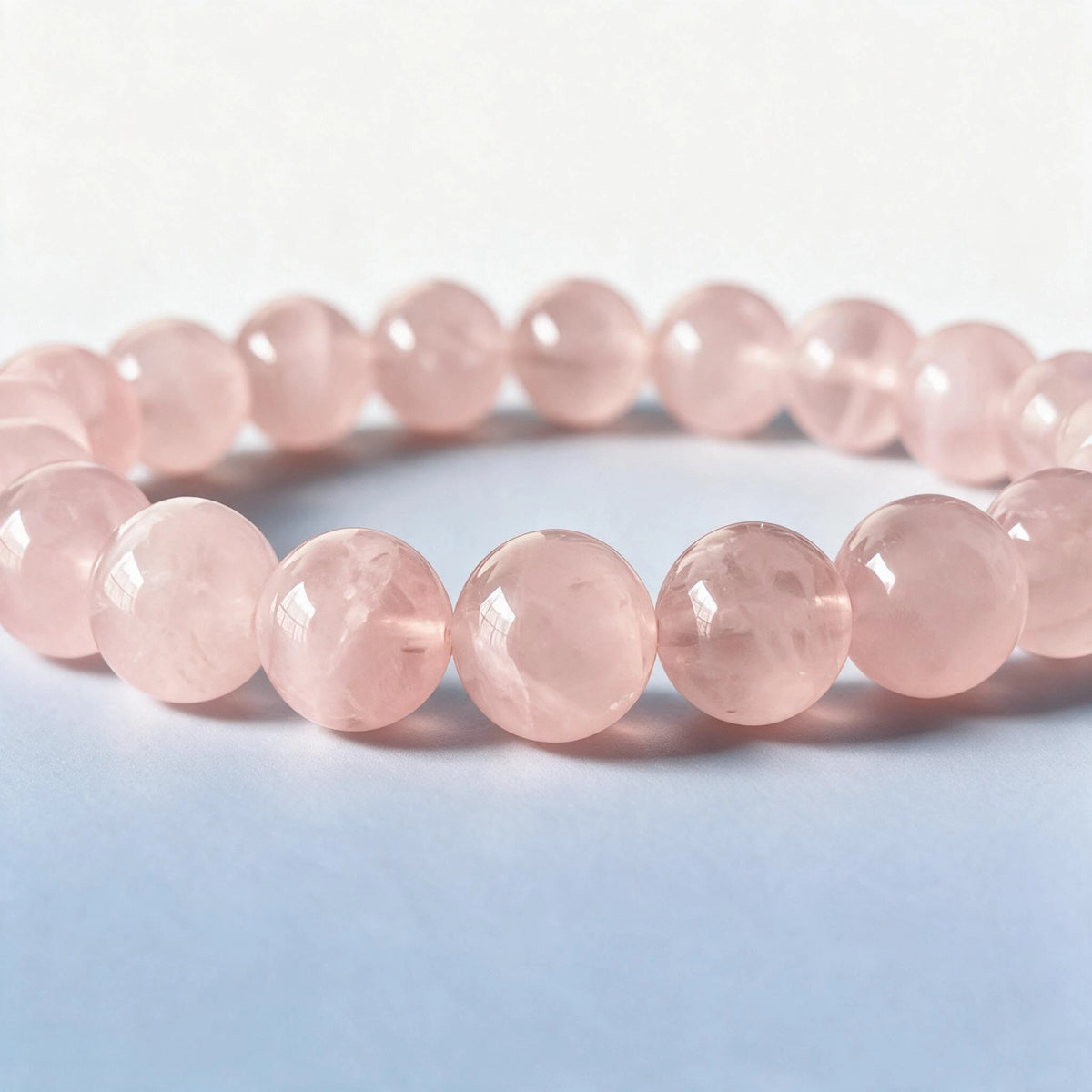
It is softer in the hand than in a photograph. Rose quartz is a 7 on the Mohs scale, harder than glass and most metals, but the surface is diffuse rather than polished, so it warms quickly and never feels slick.
It is also one of the few stones we carry that has no facet to catch the light. There is nothing to make it sparkle, and that is the point of it.
Why It Looks Cloudy
Every piece here is cloudy, and none of it is a defect.
Rose quartz is not a pink crystal. It is clear quartz carrying a pink colour in the form of nanometre-scale fibres spread evenly through the stone. Light entering it scatters off those fibres instead of passing through, and that scatter is what you see as cloud.
A perfectly clear pink quartz exists, but it is rare, it is expensive, and it is a different material. The cloud is what this stone is.
Where to Begin
If you want the purest version of the colour, take The Pure Heart. It is the plainest piece we make, and the one that photographs worst.
If you want the colour to do a job in a composition, take one of the other three: moonstone for a sheen, clear quartz for brightness, red agate for weight.
And if you are choosing between these and the paler stones we use elsewhere, the group guide covers all four side by side.