

September — The Month of Wisdom: Virgo & Libra
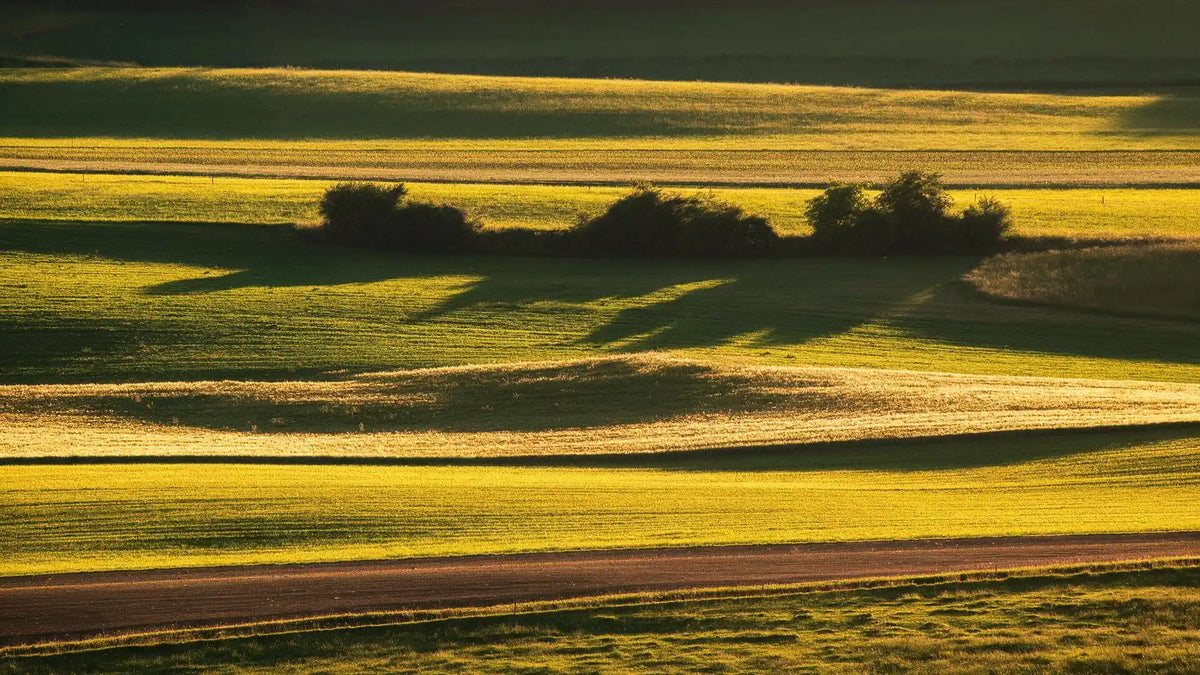
September is the clearest month of the year. The summer haze settles, the humidity drops, and the air goes thin and hard-edged — which is why long views come back in September that you couldn't get in July, and why the month has the best stargazing nights of the year. Long dark hours, and a sky clean enough to use them.
September is also the month the dark takes over. The equinox falls in the second half of September, and it's the exact point where night becomes longer than day. After that the year is losing light every single day until December.
So the year's clearest month is also the month it goes dark. September gives you the best view and then closes the curtain.
Why September is the month of wisdom
Wisdom is an odd fit for a month until you notice what September actually does. It's the first month since spring with nothing to produce. The harvest is mostly in, the growth is done, and the year has stopped asking you to make anything. What's left is the part that rarely gets room: looking at what happened.
The equinox does the same thing to the calendar. It's a balance point, equal light and equal dark, and it sits in the clearest sky of the year. Everything is visible in September. That's what makes it a month for weighing things rather than starting them.
September collects the same way: everything it's credited with is a form of clear sight. Truth, because in a month with this much visibility, distance and detail both sharpen. Discernment, because the equinox is a measuring point and the month invites measuring. And intellectual clarity, because the year has finally gone quiet enough to think in.
September is the month the year audits itself.
Born in September
September holds the second half of one sign and the start of another, and the seam falls on the equinox itself — the second of the year's two balance points.
The handover runs across the equinox itself, somewhere around September 22 and 23, the one moment in the year when day and night are the same length. The Virgo–Libra cusp is what that date hands to a person born in it, and the pairing reads as two instincts held at once: the wish to sort out what's worth keeping, and the wish to weigh what comes next before committing to it.
Virgo — August 23 to September 22
Virgo spends September finishing the harvest. It's the sign that appears when there is a great deal to be brought in and somebody has to decide what is worth keeping, and it arrives at exactly the point in the year that needs it. The month and the sign are doing the same job.
No other month suits Virgo better.
Virgo is read as the least romantic sign of the twelve, and as the one most interested in what can be checked. It is methodical without being slow, and it would rather be given the actual number than the encouraging version of it, the temperament of a sign that has decided accuracy is a form of care.
The cost runs the same way it runs for anyone holding a measuring stick. The same eye that catches what is wrong with a thing does not stop being accurate when it turns around and looks at the person holding it, and a Virgo can spend September sorting a year's work into what was good and what was not, and then ask the same question about itself with the same standard. Standards that high were built to be applied to tasks. Applied to a person, they do not measure anything useful.
The stone for September is a note about the difference between a verdict and a reading. Lapis lazuli is carried for discernment, and discernment is the skill of telling things apart rather than the skill of finding fault. September asks you to look at everything, including the parts you would rather have looked at differently, and to come out of it with a reading rather than a sentence.

Libra — September 23 to October 22
Libra begins on the autumn equinox, and its symbol is the scales, which isn't a metaphor anyone invented. It's a direct description of the date. Libra starts at the one point in the year when day and night are the same length, and the sign's traits follow from that placement: fairness, an instinct for balance, a strong dislike of lopsided arrangements, and a tendency to see every argument from more than one side.
Libra is an air sign, and it's the only one of the twelve usually drawn as an object rather than a living thing. It's also the second equinox sign: Aries opens the year at the spring equinox, Libra opens its second half here. The two balance points of the year are both sign boundaries, and the year is measured from them.
The cost of weighing everything is that a Libra is usually the last person in the room to be weighed. The reflex that sees every argument from more than one side does not stop at other people's arguments. It applies to whether the thing you want is reasonable, whether the ask is fair to make, whether your own side of it holds up. Where Scorpio arrives next month and takes a thing to pieces, Libra is the sign that stays on the surface being careful with everyone in it, and the one it is most careful with is not itself.
The stone for September is a note about that. Lapis lazuli is carried for truth, and the harder half of truth for this sign is not being honest with other people. It is putting your own side into the weighing, which is the one account a Libra tends to leave off the scale.
The stone of September — Lapis Lazuli
September's birth month crystal is lapis lazuli, with blue apatite and blue hawk's eye beside it.
The first thing to know about lapis is that it isn't a mineral. It's a rock — a mixture of several minerals that formed together, which is why every piece looks slightly different. The blue comes from lazurite. The white streaks are calcite. The gold flecks are pyrite. All three are in most lapis, and none of them are flaws.
That mixture has a consequence for buying: lapis is judged by how much blue it holds and how little of everything else. The highest grade is almost pure lazurite with no visible calcite at all. The pieces with brighter gold are often the lowest grade, because the pyrite is usually accompanied by more calcite; but plenty of people prefer them, and the gold-on-blue is one of the most recognisable patterns in stone.
Lapis has been mined in the same region of Afghanistan for more than six thousand years, and it has been traded across the ancient world for almost that long. Its place in history is not decorative; it's economic. Ground lapis was the source of ultramarine, a blue pigment so difficult to make and so prized that it was worth more than gold by weight through the Middle Ages and the Renaissance. It was reserved for the most important figures in a painting, which is why the Virgin Mary so often wears it. The best-known blue robes in European art are made of this stone; and in plenty of them the pigment cost more than the gold leaf beside it.
It carries a long reputation for truth, discernment and clear sight. Given what it actually is, a rock that contains its own light, mined for six millennia, once worth more than gold, none of that is why people wanted it. It was the colour.
Lapis lazuli has long been carried as a stone of truth, discernment and intellectual clarity.
That is the same list September is about, and it is the one month where the stone's reputation and the month's own character describe the same weather. September's gift is visibility: the haze goes, the air thins, and for a few weeks everything is exposed at once. Truth, discernment and intellectual clarity are what a person does with that, which is why the stone sits here rather than under the sapphire it inherits its colour from.
None of that is a claim about what a stone does. Nothing here has been shown to change anything for the person wearing it. What it is worn for is the reminder, not the result.
A stone is filed under a month here rather than under a sign, so one month can hand two different signs the same stone and a different note.

Wearing it: lapis is 5 to 6 on the Mohs scale, which makes it one of the softer stones in this collection, and it's a rock rather than a single mineral, so it's more sensitive than most. It shouldn't be soaked, and it shouldn't meet acids or household cleaners, which will attack the calcite. Ultrasonic and steam cleaners shouldn't be used. A dry or barely damp soft cloth is the whole method. Keep it away from anything harder in a box; it will take scratches.
The other stones of September
Blue Apatite is a phosphate mineral, and it has the best name in this collection. Apatite comes from the Greek apatáō, meaning to deceive, because it's so easily mistaken for other stones. Apatite has turned up in natural colours across blue, green, yellow, and violet, and it's often confused with beryl, tourmaline, and topaz depending on the colour, which is why it was named after the problem rather than the appearance.
There's a second reason to know it. Apatite isn't merely measured on the Mohs scale — it's part of the definition. The scale is built on ten reference minerals, and apatite is number five. Anything that can be scratched with a knife and can scratch a coin is roughly apatite-hard, and that makes this one of the few stones that is its own standard.
It's been read as a stone of clarity, knowledge and inner vision. With a name that means "deceiving" and a body that defines a hardness scale, it's a fitting stone for a month about seeing what's actually there.
Wearing it: 5 on the Mohs scale, and brittle. Blue apatite needs the same care as lapis: no ultrasonic cleaning, keep it away from harder stones, and don't subject it to knocks.
Blue Hawk's Eye isn't a different stone from tiger's eye. It's tiger's eye at an earlier stage of the same process. Both are quartz intergrown with parallel amphibole fibres, and both get their shine from that fibre structure. The difference is what happened to the fibres afterwards: in tiger's eye they've already oxidised, which gives the stone its gold, the same thing November describes for the golden version. In hawk's eye they haven't, and the stone stays blue-grey.
That means the blue version is the same material at a different point; and in the trade the two are treated as separate stones, which is how we list them. Hawk's eye is read for clear perception and calm sight, closer to observation than to action.
Wearing it: quartz-based, around 7 on the Mohs scale, and durable enough for everyday wear with standard gentle care.
Common questions
Which stone is September's?
Lapis lazuli. September's conventional stone is the sapphire, and the colour is what carried over: lapis is the deep blue stone that holds it here, with blue apatite and hawk's eye sitting beside it.
Why does September's stone run blue?
Because September's traditional stone is the sapphire, which is a deep blue. Every month here keeps its traditional stone's colour.
Are the gold flecks in lapis a defect?
No. The gold is pyrite and the white streaks are calcite, and both are part of what lapis is — a rock made of several minerals. Higher grades have less of both, and plenty of people prefer pieces with more. What matters is that you know what you're looking at.
Is lapis lazuli dyed?
Ours isn't. We don't dye our stones. Lapis is a soft, vivid rock, though, and there's one thing to expect from one: over a long stretch of wear, surface powder can mix with sweat or water and come away looking like colour. That's the surface, not the stone. If you ever want to know what a piece in front of you is, ask the seller the direct question.
Does lapis need special care?
Yes. It's a rock, 5 to 6 on the Mohs scale, and the calcite in it reacts to acids. No soaking, no ultrasonic or steam cleaning, no household sprays. A soft dry cloth and an occasional barely-damp one is all it needs.
What if September isn't my month?
Wear it anyway. The month names the stone; it doesn't decide who can wear it. September's set is for when you want something that looks decided rather than decorative.
How do I look after three stones at once?
The general care list is water, cleaning, sunlight and storage, and it is in our crystal bracelet care guide. The one thing September asks: hawk's eye takes daily wear easily, while lapis and blue apatite both come off for swimming or anything with soap. Not because of the water, but because of chlorine, soap and the softer surface underneath.
Where to go next
September is one of the year's two balance points. August is the month that brought the harvest in, and October is the month the colour goes out. The other balance point is in March, where the same equinox opens the year instead of closing it.
How each month balances against the rest of the calendar is followed in The Ember Year.
September's three blue stones share a palette, not a mineral family. Lapis Lazuli is worn in True North with hematite. Blue Apatite anchors The Epiphany Stone on its own. Blue Hawk's Eye is worn in The Iron Hawk with hematite, and in The Triple Vision alongside the golden and red versions. September's stone can go into the pieces that take a birth month crystal, which are under Personalized.