
August — The Month of Restoration: Leo & Virgo
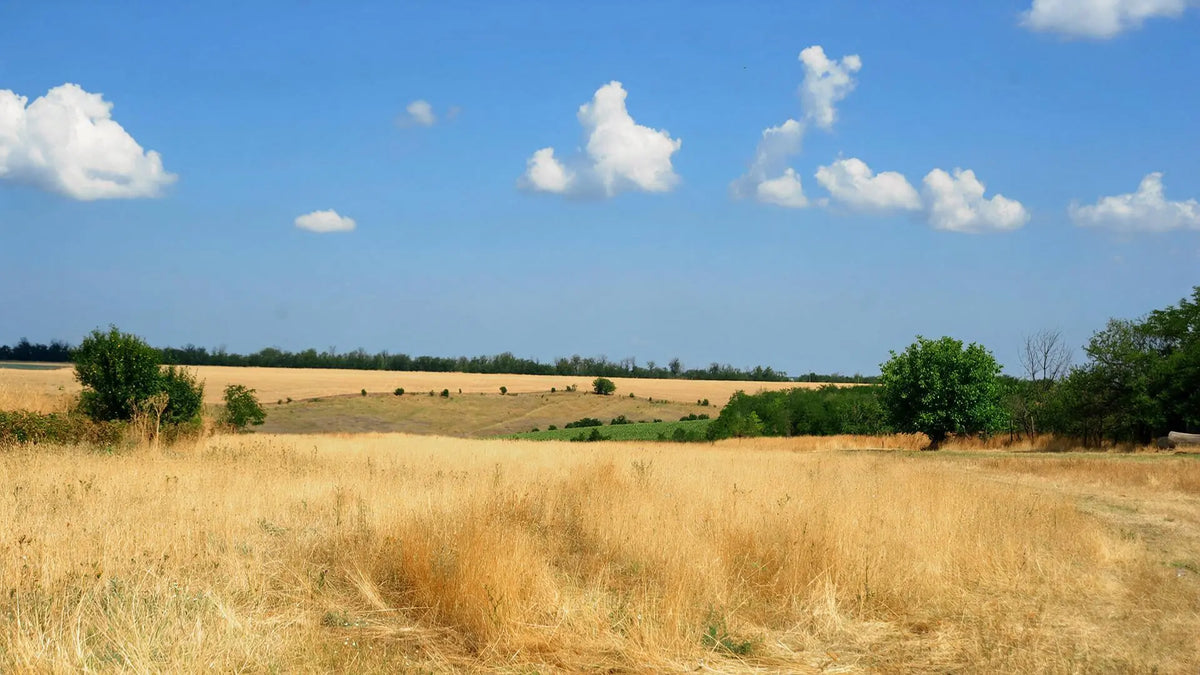
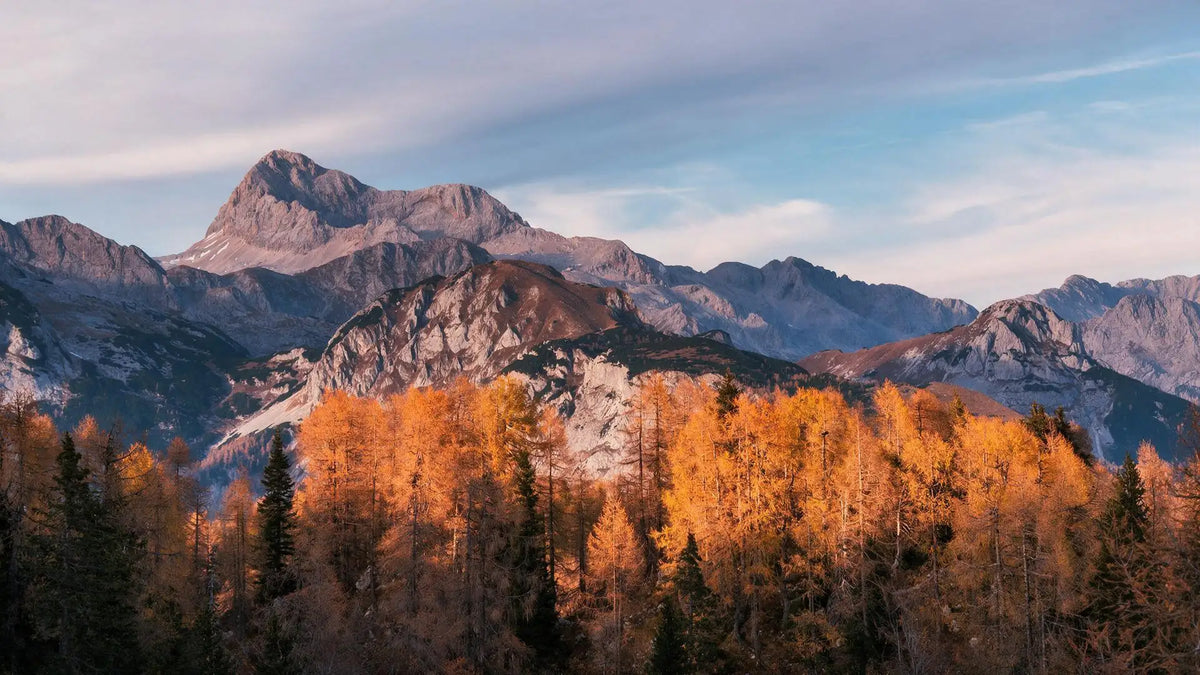
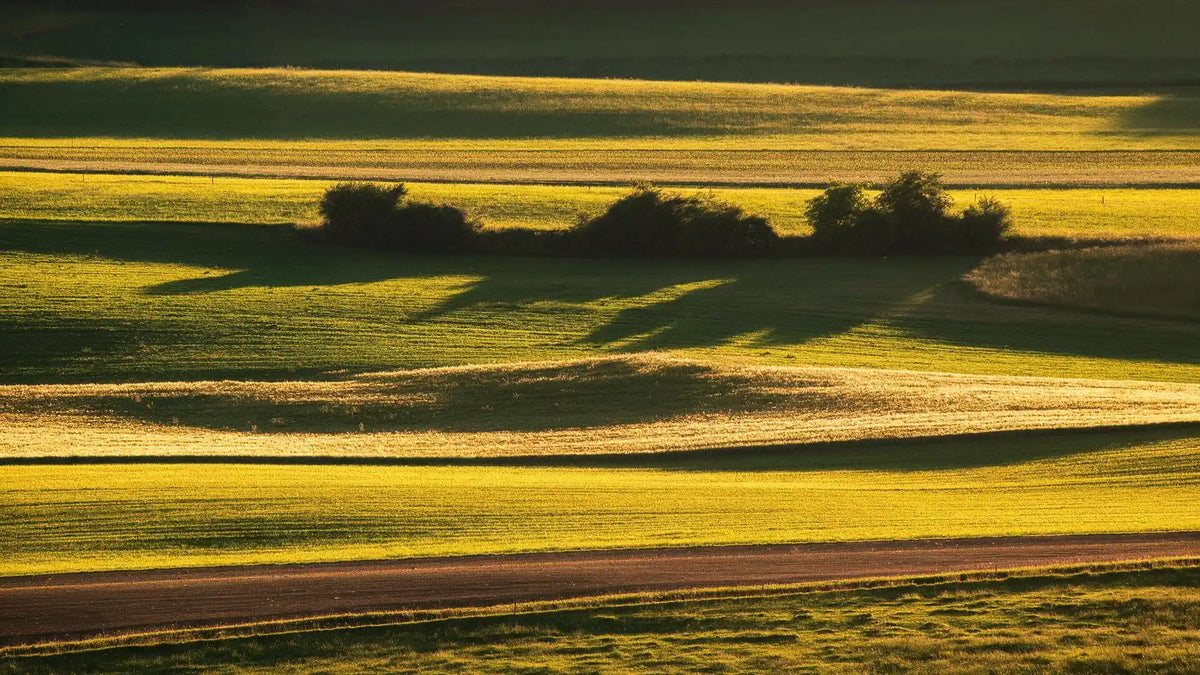
August is the month you can see the light's angle. In June the sun was overhead and invisible — you felt it rather than saw it. By August it's visibly lower, the shadows at five in the afternoon are long, and the colour of the light has gone from white to gold. Nothing has cooled down yet. But the sky is already telling you which way the year is going.
That's the character of August: the first month where the ending is visible while the season is still at full strength. The heat is at its most tiring, everything is at its largest and heaviest, and the days are shortening fast enough that you notice them.
Why August is the month of restoration
By August the year has been producing for five months. Everything is finished, or nearly: the leaves are mature, the fruit is on, the grass is seeding. There's nothing left to grow toward, and the heat has stopped being a novelty and become a weight.
So August's reputation is about cooling rather than building. Restoration, because it's the first month in a long stretch that isn't asking for output. Deep calm, because the year finally exhales. And emotional release, because when the pressure to produce comes off, what's underneath it becomes audible.
It's worth being precise about what the month actually is, because it's easy to mistake the season for its end. August is the harvest starting, not the year ending. The grain comes in during this month. The growth stops; the gathering begins. August is where the year's work is converted into something you can carry.
Born in August
August holds the last of one sign and the first of another, and between them the year's whole manner changes: from showing what you've done to bringing it in.
Leo — July 23 to August 22
Leo spends August in its second half, still in its own season. Where July gave Leo its beginning, August asks it to carry the weight of the summer to the finish. It's the year's showiest energy running through the year's hottest, most tiring weeks — a sign that doesn't know how to be discreet, keeping the fire lit while the light is already slanting and the grass around it has gone to seed.
That is where the generosity and the stubbornness in Leo come from. It behaves as though warmth were inexhaustible, refusing to ration its presence or pace itself for what comes next. Leo gives the last of the summer away, and it doesn't do it quietly.
The cost is that the pace never gets set. A sign that refuses to ration its presence does not have a setting for half: the party it is still hosting at the end, the week it agreed to before checking what the week already had in it, the summer it gave away completely and then had to finish on empty. Leo's generosity is real, and it is not renewable on demand. The thing that made August worth being at is the same thing that makes it hard to be at by the end of it.
The stone for August is a note about the rest of it. Prehnite has been read as a stone of emotional release, and release is the one thing a Leo does not get to do while the lights are still on. There is a version of this sign that knows how to close a season without an audience, and August is the month that asks for it.
The handover happens around August 22 and 23, where fire gives way to earth and the year's whole manner changes with it. The Leo–Virgo cusp is where August's two impulses meet: the wish to be seen doing the thing, and the wish to have it sorted and put away.

Virgo — August 23 to September 22
Virgo arrives as the harvest does. Precision, patience with detail, a talent for sorting what's good from what isn't, and a deep preference for work that's done properly over work that's seen; the temperament of a gathering month rather than a growing one.
Virgo is an earth sign, and it completes something worth noticing. Fire, earth, air and water run in that order round the zodiac, three times in all, which is why any four signs in a row hold one of each, and any three in a row are missing exactly one. This summer's run is a complete set: Gemini air, Cancer water, Leo fire, Virgo earth. August closes it, and it closes the constellation's own story too, because Virgo's brightest star is named Spica, Latin for "ear of grain."
Leo is still in full view when Virgo arrives with its eye on the harvest. By the end of August, being seen matters less than sorting what's ready to bring in.
If you are the one who can see what is wrong with a thing in the first two seconds, the cost is that you rarely get to see it any other way first. Sorting is a talent and a lens. The same eye that picks the good fruit out of a basket also finds the one bad one in it, and a Virgo usually says so, because in a month like this one the sorting is the point. What the people around it hear is the one bad one.
The stone for August is a note about the other half of sorting. Prehnite has been read as a stone of deep calm, and the calm in question is the earned kind rather than the untested kind. Knowing what to bring in and what to leave in the field is the whole job of this month, and it is the same job done on the people in a room.
The stone of August — Prehnite
August's birth month crystal is prehnite, with malachite beside it.
Prehnite is a calcium aluminium silicate, and it's unusual in a way you notice immediately: it almost never forms crystals. Where most minerals here grew into prisms, prehnite usually sets as masses — lumpy forms that fill the space they were given rather than building a shape of its own.
It also has one of the better origin stories in mineralogy. Prehnite was described in 1788 by A.G. Werner and named after Colonel Hendrik von Prehn, the Dutch military officer who was in charge of the region where it was first found. It's one of the earliest minerals to be named after a person at all, which means this quiet, lumpy, unglamorous stone has a small place in the history of how minerals got their names.
Since then it's turned up in China, Scotland, Australia, the United States and New Zealand. The colour is usually a soft yellow-green, and the best of it is translucent with a wet, slightly luminous look to the surface. There's one more piece of its story: in 2000 a pocket of orange prehnite came out of the N'chwaning mine in South Africa. It put orange prehnite on the map, and by 2002 the pocket was worked out; nothing of that quality has come out of there since.
Prehnite sits at the heart, and it's been read as a stone that links feeling to will, so that what you want and what you care about are pointing the same way. It's been associated with restoration and with calm that comes after something difficult, rather than calm that was never disturbed.
Prehnite has long been carried as a stone of restoration, deep calm and emotional release.
That is the same list August is about. Restoration is not the same as rest; it is what happens after something has taken a toll, and August is the first month in a long stretch that stops asking for output. Deep calm and emotional release are what becomes audible once the pressure comes off.
None of that is a claim about what a stone does. Nothing here has been shown to change anything for the person wearing it. What it is worn for is the reminder, not the result.
What a stone is filed under here is a month, not a sign, which is why one sign can arrive twice in a year and meet two different stones.

Wearing it: prehnite is 6 to 6.5 on the Mohs scale, softer than quartz, and it has good cleavage in one direction, so it takes a mark more readily than the harder stones here. On a wrist it's fine; in a pocket with keys it isn't. Keep it out of hot water and away from household cleaners.
The other stone of August — Malachite
Malachite is a copper mineral, copper carbonate hydroxide, and that one fact explains almost everything about it. The vivid green is copper's colour. It was one of the first ores humans mined for metal. It was ground and used as a green pigment in painting for centuries, and it's still the reference green in some artists' palettes. It forms in masses with concentric banding, in the same underground cavities where the copper chemistry allows it.
It's also the one stone in this collection whose care note is a list rather than a sentence, so here it is in full. Malachite's structure makes it sensitive to acids and to ammonia: acidic cleaners, vinegar, and most household sprays will dull or damage the polished surface, and ultrasonic and steam cleaners shouldn't be used on it at all. Copper-bearing dust is also not something to breathe, which matters to anyone cutting or polishing the stone and not at all to anyone wearing it. A finished, polished piece is safe to wear and safe to handle. It just needs the right care. One thing worth expecting, since it's a soft stone with a strong colour: over a long stretch of normal wear, fine surface powder can mix with sweat or water and come away looking like colour. That's the surface, not the stone, and it takes years rather than months.
It's been read as a stone of transformation and emotional release — a stone associated with moving through something rather than around it. Placed next to prehnite, the pairing is close to the month itself: one stone for the calm that follows, and one for the process that gets you there.
Wearing it: 3.5 to 4 on the Mohs scale, so it's among the softer stones here and will scratch against anything harder. Water is fine for a quick rinse and a dry; soaking and cleaners are not, and acids are the thing to keep it away from entirely.
Common questions
Is August's stone a birth month crystal?
Yes. August's conventional stone is peridot, which is a pale yellow-green, and prehnite fills that colour in this collection. Malachite is the deeper green that sits beside it.
What makes August's stone green?
Because August's traditional stone is peridot, and peridot is green. Every month keeps the colour its traditional stone carried; August's is the softer of the year's two greens.
Does malachite need special care?
It does, and it's the stone here with the longest list of things to keep it away from. No acids, no ammonia-based cleaners, no ultrasonic or steam cleaning. A damp cloth and a dry one. That is all it needs. It's also among the softer stones in the collection, at 3.5 to 4 on the Mohs scale, so it scratches easily.
Is malachite safe to wear?
Polished malachite is safe to wear and handle. The caution around malachite is about the dust produced when it's cut or polished, which is a workshop concern, not a wearing one.
What separates the two August stones?
Prehnite is the month's anchor: a pale, translucent yellow-green that usually forms in masses rather than crystals. Malachite is the deep banded green, a copper mineral, and considerably softer.
If I'm not born in August, can I wear these?
Yes. The calendar sorts the stones; it doesn't gate them. August's set is what to wear when you want something that looks like the season is nearly over.
What do I need to know about caring for them?
Water, cleaners, storage and light are all covered in our crystal bracelet care guide. August's warning: malachite is the one piece here that comes off before swimming or anything with cleaners, and prehnite is softer than quartz, so the two of them together want a pouch rather than a loose box.
Where to go next
August is where growth stops and gathering starts. July is the heat this month is still living on, and September is the balance point that follows, the first month where the air goes thin enough to see a long way again.
The seasonal movement across all twelve months is followed in The Ember Year.
Malachite is worn in The Forest Breath with misty cloud agate, and in The Resilient Bloom with red agate. Prehnite can be added where a birth month crystal is offered; Personalized has the list.
Malachite has a collection of its own, and a longer piece behind it: the malachite collection, and malachite, the stone that is named soft.