
May — The Month of Flourishing: Taurus & Gemini
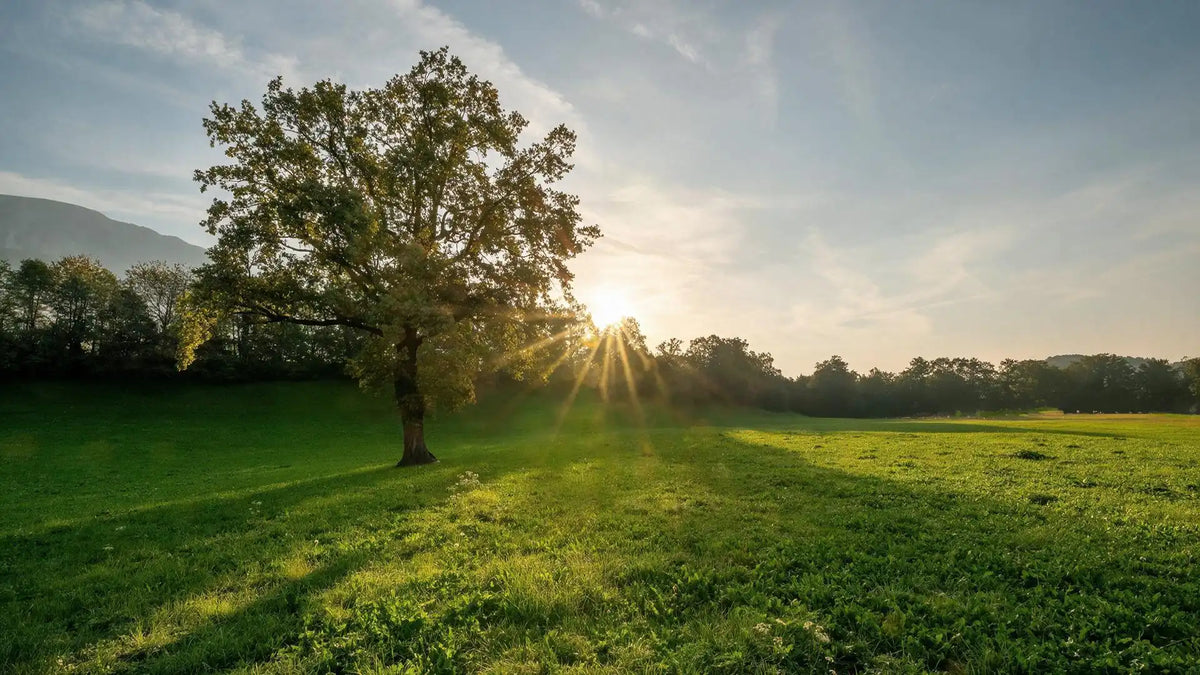
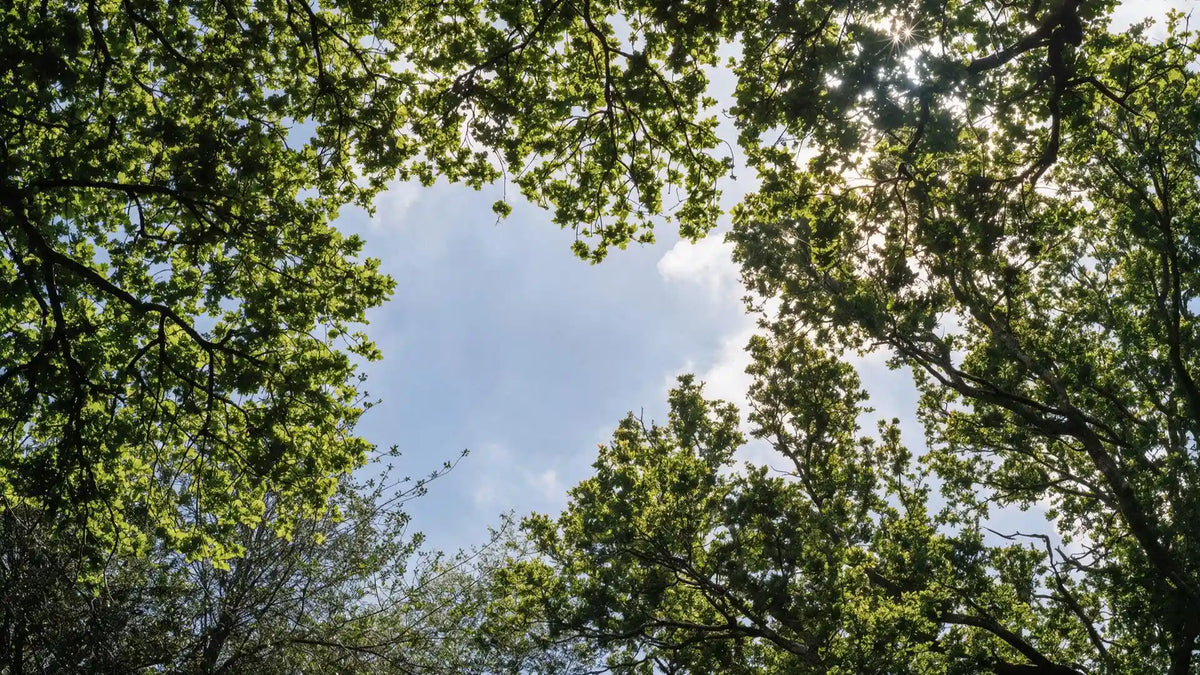
May is the greenest month of the year, and the green it's famous for only exists for a few weeks. New leaves aren't the same green as old ones. The first foliage of spring is thinner, brighter and slightly yellow, caught before the leaf has finished building its chlorophyll. By July the canopy has settled into a darker, steadier colour it will hold until autumn. The bright green in every picture of May is a stage, not a state.
May is also the month the light goes. April gave the forest floor its brightest window; in May the canopy closes over and takes it back. The growth is what does it. Everything the year has been building toward arrives at once and blocks out the sun that made it possible. What's left beneath the trees is shade, thick and cool, and the work of the year moves from reaching upward to filling out from within.
Why May is the month of flourishing
May is the peak, not the beginning. The growing started back in March with water and mud; by May it's full and visible, and the year is producing at its maximum rate. Everything is putting on mass: leaves, grass, blossom, and everything that feeds on them.
What makes May feel like abundance rather than just growth is the volume. April was the light; May is the yield. And it arrives grounded. This is not the airy hope of a resolution, but a measurable thing you can stand in. Soil that was cold and sticky two months ago is warm and deep with roots, holding moisture without drowning.
Everything May is credited with belongs to a peak reached properly. Abundance, because there's visibly more of everything than there was a month ago. Vitality, because the growth is fast enough that you can see it. And grounded prosperity, because none of it came from nowhere — it's the return on four months that looked like nothing was happening.
May is the month that justifies the winter.
Born in May
May holds the last half of one sign and the first of another, and the seam falls between the two most opposite ways of meeting a world that has suddenly produced a lot.
Taurus — April 20 to May 20
Taurus settles in and then stays put. By May it is standing in the middle of the year's largest supply, which is where its reputation for both comfort and stubbornness comes from: a sign that would rather have the thing than the idea of the thing, and that treats having enough as a position to hold rather than a stage to pass through.
May suits Taurus for exactly that reason. Taurus is an earth sign in the middle of the year's biggest yield, and it accumulates. What it does with a month like this is take it seriously and keep it.
The cost of that is one line further on than it looks. A sign that would rather have the thing than the idea of the thing is also a sign that can hold on past the point where holding on is the useful move — and the same grip that keeps what is good is the grip that keeps what has stopped being good.
The stone for May is a note about that difference. Green grossular is carried for abundance, and abundance in the sense a farmer means it is not a pile but a rate: the yield that keeps coming while the season is running, which is something you take part in rather than something you keep.

The days around that switch, roughly May 20 and 21, mark the Taurus–Gemini cusp, the boundary where fixed earth hands over to mutable air. A person born inside that window is on the Taurus–Gemini cusp. They hold an unusual rhythm: the grounding patience to build tangible security paired with the quick restless curiosity to see what lies past the fence.
Gemini — May 21 to June 20
Gemini arrives at the peak of the green and starts talking about it. Curiosity, speed, sociability, a talent for language, and a tendency to be interested in more things at once than any one person can hold — the marks of a mind that won't sit down.
Gemini is an air sign, and it doesn't accumulate. It moves constantly: between people, between subjects, between versions of an idea. Where Taurus wants the thing itself, Gemini wants to know about it.
For Taurus, May offers something to keep. For Gemini, it offers more than one thing to talk about. Neither has to go looking far for material this month.
What it costs is harder to see than what it gives. A mind that changes subject this often is hard to pin to anything: the plan made on Monday is a different conversation by Thursday, the interest that was going to be the thing is one of five by the end of the month, and the version of itself that shows up depends on who is in the room. None of that is dishonesty. It is a sign that never had to become one thing.
Here the stone is less about ideas than about what holds an idea long enough for it to land. Green grossular is carried for grounded prosperity, and grounded is the word doing the work: it is the counterpart to everything Gemini is good at, which makes it a fair thing to wear for a sign that has never needed help starting a conversation and occasionally needs help finishing one.
The stone of May — Green Grossular
May's birth month crystal is green grossular garnet, with Gobi golden silk jade beside it.
Green Grossular is a garnet. That's the first surprising thing about it, and it's a direct link back to January: the deep red stone at the start of the year and this green one in the middle are the same mineral group. Garnets share a crystal structure and swap out the metals inside it, which is why one family produces red, orange, yellow, green and colourless stones. Grossular is the calcium-aluminium garnet, and it's named after grossularia, the botanical name for the gooseberry, after the fruit's dense, pale-green skin. In this collection, the stone arrives in its compact, massive form (known mineralogically as hydrogrossular), where the garnet forms as a solid, fine-grained mass rather than transparent faceted crystals. That dense habit is what gives each bead its smooth, substantial weight and waxy-to-vitreous surface.
Most green grossular comes from Mali and East Africa, and in the trade it's often sold as African jade or African green garnet. That second name is the accurate one; the first is a trade nickname, and the difference matters, because this stone isn't jade. It is a garnet. It sits harder at 7 to 7.5 on the Mohs scale, feels noticeably denser in the hand, and forms as a compact isometric crystal aggregate rather than the fibrous weave of true jade. Hold a bead between your fingers and the weight surprises you: it has a solid, cool gravity that lighter stones lack.
It's also one of the few stones in this collection with a real claim to a season. Green grossular is often recognised as a seasonal birthstone, assigned by colour and calendar rather than the conventional jewelers' list, for the heart of spring from late April through late May. That's almost exactly May's own window, and it's the closest thing in the year to an external confirmation of where this stone belongs. The qualities attached to it in those systems are renewal, success in new ventures, and prosperity, and the chakra it's placed with is the heart.
Green grossular has long been carried as a stone of abundance, vitality and grounded prosperity.
That is the same list May is about. Flourishing is not the same as growing: growth is the work, and flourishing is what the work looks like from outside when it is going well. Abundance, vitality and grounded prosperity are the three things a month at full production actually produces.
None of that is a claim about what a stone does. Nothing here has been shown to change anything for the person wearing it; what it's worn for is the reminder, not the result.
Nothing here is assigned by star sign. The month is the filing system, and the stone belongs to the month.

Wearing it: garnet, so 6.5 to 7.5 on the Mohs scale, and like January's stone it has no cleavage at all. That makes it one of the most durable stones here; it will not split along a flat plane the way a feldspar can, and it holds up effortlessly in daily wear alongside other minerals.
The other stone of May — Gobi Golden Silk Jade
This one needs its name explained before anything else. Jade is used loosely in the stone trade for a long list of materials that aren't jade at all, and this is one of them. Gobi Golden Silk Jade is a quartz-family material from the Gobi region, belonging to the same mineral group as clear quartz, carnelian, and the agates. It is neither nephrite nor jadeite, the two minerals that define true jade. It's an honest stone. It just isn't that one.
What it is, is banded. The Chinese name refers to the fine thread-like lines running through it, and those lines are what give it its character: a golden-yellow stone with a silky structure that catches light differently in different directions. It's a weathered material, formed and sculpted in dry desert basins across vast stretches of time, and the pieces that come out of it have an unusually settled, wind-buffed feel for something that's mostly silica.
It stands for enduring abundance and grounded vitality — the long kind of plenty rather than the sudden kind. Placed beside the month's anchor, it fills in the other half of the idea: grossular is about what the year has produced, and this is about what it can keep producing.
Wearing it: quartz-family, so around 7 on the Mohs scale and easy to live with. The one caution is the same as any banded quartz: pieces can have fine natural seams between the bands, so avoiding hard knocks against granite or metal edges is the only care it really asks for.
Common questions
How does May's stone work as a birth month crystal?
Through the seasonal lists, which is something the rest of the collection doesn't have. Green grossular is used as a natural birthstone for the heart of spring, roughly April 20 to May 20, which matches May's own calendar window. It's the one month where a stone's seasonal assignment and our month line up independently.
Doesn't May traditionally belong to emerald? Why choose green grossular?
May's conventional stone is emerald, which established green as the month's defining colour. We kept that traditional colour while choosing a stone built for daily tactile wear: grossular garnet provides a dense, solid weight, a waxy mineral surface, and durability that doesn't ask for delicate handling.
Is African jade real jade?
No. African jade is a trade nickname for hydrogrossular, a dense, massive green variety of grossular garnet. The same applies to Gobi Golden Silk Jade: it is a quartz-family material rather than nephrite or jadeite. Both stones are fine; the names just aren't mineralogical.
How do the two May stones differ?
Green grossular is a garnet and the month's anchor — the greener, harder stone with a seasonal assignment of its own. Gobi Golden Silk Jade is a warmer, more golden quartz material with fine banding, read as a stone of long-lasting plenty.
Is May's set only for May birthdays?
No. Organising by month is a way to follow the year's arc, not a restriction on who can wear them. For stones that carry deep, grounded green and warm desert gold, May's pair is where that physical weight sits.
Do these need any looking after?
Routine guidelines on water, cleaning, storage, and sunlight are set out in our crystal bracelet care guide. Where May differs: both stones are indifferent to water and easy to live with, and the only thing to avoid is a knock on the thin banded edge of the Gobi stone.
Where to go next
May is the year's peak production, at the point where the light starts going. April was the window that opened it, and June is the month where the year's maximum and its turn arrive together.
The Ember Year is where all twelve months sit together.
Gobi Golden Silk Jade is worn in The Golden Horizon with clear quartz. Green grossular goes into the pieces that carry one, under Personalized; for a closer green in a finished piece, The Forest Breath runs nearest.